Showing posts with label medicine. Show all posts

Friday, March 13, 2009

Spider Bite Allows Paraplegic to Walk Again


He has been confined to a wheelchair for 20 years. Now a paraplegic man is walking again, and his doctors call it a miracle. CBS13 went to Manteca to find out how a spider bite helped get him back on his feet.

A motorcycle accident almost killed David 21 years ago. At the time he might have wished he was dead.

Ever since, David's been relying on his wheelchair to get around. Then the spider bite. A Brown Recluse [spider] sent him to the hospital, then to rehab for eight months.

A nurse noticed David's leg spasm and ran a test on him.

"When they zapped my legs, I felt the current, I was like 'whoa' and I yelled," he says.

"She says,'your nerves are alive. They're just asleep'," explained David.

Five days later David was walking.

From CBS

Stem Cell Release Cartoon


From The Week

Friday, February 20, 2009

Leafcutter ants have harvested fungi using antibiotics for 50 million years


This video segment from Evolution: "Evolutionary Arms Race," illustrates the coevolution of the leafcutter ant and the fungi on which it feeds. Leafcutters have been "farming" this fungus for millions of years, feeding, fertilizing, weeding, and harvesting it.

Fifty million years before humankind began farming, ancient ants were already in the agriculture business.

Over time, leafcutter ants have evolved a complex system of agriculture in their nests, cultivating bumper crops of fungi that are the ants' sole food source. Foragers cut pieces of leaves from trees and drag them home to their nest, where others chew them into a paste that becomes the fungi's dinner. There are, however, at least two more participants in this relationship. Surprising the scientific community, graduate student Cameron Currie discovered a mold that threatens to kill the fungi, and the antibiotic which the ants produce in order to control it.


From here.

Wednesday, January 21, 2009

Guy Gets Arm Replaced Luke Skywalker Style


Evan Reynolds, 19, got his hand and part of his arm ripped off in a car accident and has since been fitted with an i-LIMB, a robotic hand developed by an Apple/Star Wars fanboy.
The i-Limb was developed by a Scottish company, Touch Bionics, and has won awards for its innovative technology. The total cost including the hand itself and the fitting is about £30,000.
Time Magazine named the i-LIMB as one of the Top 50 inventions of 2008.


See video here.

Wednesday, January 07, 2009

Stem Cells Undo Birth Defects, May Cure Heroin Babies


By injecting stem cells directly into the brain, scientists have successfully reversed neural birth defects in mice whose mothers were given heroin during pregnancy. Even though most of the transplanted cells did not survive, they induced the brain's own cells to carry out extensive repairs.

Joseph Yanai, director of the Ross Laboratory for Studies in Neural Birth Defects at the Hebrew University-Hadassah Medical School, in Jerusalem, says that stem-cell therapies are ideal for treating birth defects where the mechanism of damage is multifaceted and poorly understood. "If you use neural stem cells," says Yanai, "they are your little doctors. They're looking for the defect, they're diagnosing it, and they're differentiating into what's needed to repair the defect. They are doing my job, in a way."

Yanai and his colleagues began with mice that had been exposed to heroin in the womb. These mice suffer from learning deficits; when placed in a tank of murky water, for instance, they take longer than normal mice to find their way back to a submerged platform. And in their hippocampus--an area of the brain associated with memory and navigation--critical biochemical pathways are disrupted, and fewer new cells are produced.

All of those problems are swiftly resolved when the researchers inject neural stem cells derived from embryonic mice into the brains of the heroin-exposed animals. When swimming, the treated mice caught up with their normal counterparts, and their cellular and biochemical deficits disappeared. Yanai announced these findings in 2007 and 2008.

Such dramatic results were surprising, considering that just a fraction of a percent of the transplanted stem cells survived inside the mice's brains. But they are consistent with an emerging consensus of how adult stem cells perform their many functions through so-called bystander or chaperone effects. Beyond simply generating replacements for damaged cells, stem cells seem to produce signals that spur other cells to carry out normal organ maintenance and initiate damage control.


From Technology Review, read more there.

Wednesday, December 24, 2008

Bio-Printing Technology To Produce Functional Human Organs


Medical science could change forever thanks to a “special” inkjet-printer as a Japanese professor says that his machine could generate human organs. Makoto Nakamura from the Toyama University, Japan claims that the technology is very simple and it works just like a conventional inkjet printer, but instead of jetting out ink droplets, the machine will jet out hundreds, maybe thousands of cells per second.

The professor from Toyama city is not sure that the inkjet printer-like machine can produce human organs, but it’s worth trying as the preliminary tests were encouraging.

“It would be like building a huge skyscraper on a micro level using different kinds of cells and other materials instead of steel beams, concrete and glass,” said Nakamura. “Ultimately I hope to make a heart.”

Nakamura is aware that developing a heart could take him about 20 years, but he is also very confident that this technology could lead to producing good hearts for people in need of heart transplants. The advantage of this inkjet-like technique is that the heart will be produced with cells coming from the patient therefore the body will not reject it.

The organ printing technique should be world’s finest printed 3D structure, as Nakamura likes to say. The technology is also compared to slicing a fruit as the organ will be cut horizontally and the researchers will observe the pattern of the cells.


More about Bio-Printing

Thanks to RM

Thursday, December 11, 2008

Scientists extract images directly from brain


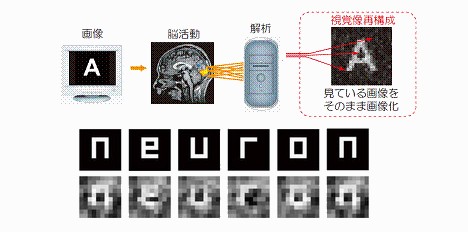
Researchers from Japan’s ATR Computational Neuroscience Laboratories have developed new brain analysis technology that can reconstruct the images inside a person’s mind and display them on a computer monitor, it was announced on December 11. According to the researchers, further development of the technology may soon make it possible to view other people’s dreams while they sleep.

The scientists were able to reconstruct various images viewed by a person by analyzing changes in their cerebral blood flow. Using a functional magnetic resonance imaging (fMRI) machine, the researchers first mapped the blood flow changes that occurred in the cerebral visual cortex as subjects viewed various images held in front of their eyes. Subjects were shown 400 random 10 x 10 pixel black-and-white images for a period of 12 seconds each. While the fMRI machine monitored the changes in brain activity, a computer crunched the data and learned to associate the various changes in brain activity with the different image designs.

Then, when the test subjects were shown a completely new set of images, such as the letters N-E-U-R-O-N, the system was able to reconstruct and display what the test subjects were viewing based solely on their brain activity.
For now, the system is only able to reproduce simple black-and-white images. But Dr. Kang Cheng, a researcher from the RIKEN Brain Science Institute, suggests that improving the measurement accuracy will make it possible to reproduce images in color.

“These results are a breakthrough in terms of understanding brain activity,” says Dr. Cheng. “In as little as 10 years, advances in this field of research may make it possible to read a person’s thoughts with some degree of accuracy.”

The researchers suggest a future version of this technology could be applied in the fields of art and design — particularly if it becomes possible to quickly and accurately access images existing inside an artist’s head. The technology might also lead to new treatments for conditions such as psychiatric disorders involving hallucinations, by providing doctors a direct window into the mind of the patient.
ATR chief researcher Yukiyasu Kamitani says, “This technology can also be applied to senses other than vision. In the future, it may also become possible to read feelings and complicated emotional states.”

The research results appear in the December 11 issue of US science journal Neuron.

More on Brain Imaging
Original article in Japanese

Tuesday, December 09, 2008


A young Chinese woman was left partially deaf following a passionate kiss from her boyfriend.
The 20-something from Zhuhai in Guangdong province arrived at hospital having completely lost the hearing in her left ear, said local reports.
"The kiss reduced the pressure in the mouth, pulled the eardrum out and caused the breakdown of the ear."


More: Suck the air out of the kiss of deaf

Tuesday, September 16, 2008

Breast cancer vaccine kills tumors in mice

DETROIT, Sept. 15 (UPI) -- Wayne State University researchers say a breast cancer vaccine completely eliminated HER2-positive tumors in mice -- without any toxicity.

The study, published in the journal Cancer Research, suggests the vaccine could treat women with HER2-positive, treatment-resistant cancer or help prevent cancer recurrence. The researchers also say it might potentially be used in cancer-free women to prevent initial development of these tumors.

"The immune response against HER2-positive receptors we saw in this study is powerful, and works even in tumors that are resistant to current therapies," lead investigator Wei-Zen Wei says in a statement.

"The vaccine could potentially eliminate the need to even use these therapies."


More.

Wednesday, August 27, 2008

Jill Bolte Taylor: My stroke of insight @ TED


About this talk

Jill Bolte Taylor got a research opportunity few brain scientists would wish for: She had a massive stroke, and watched as her brain functions -- motion, speech, self-awareness –- shut down one by one. An astonishing story.

About Jill Bolte Taylor

Brain researcher Jill Bolte Taylor studied her own stroke as it happened -- and has become a powerful voice for brain recovery.

Go to TED

Monday, August 11, 2008

Aussies crack cancer secret


AUSTRALIAN scientists are hoping to cure leukaemia, asthma and rheumatoid arthritis after their breakthrough discovery of how to stop killer blood cells growing.

The team has unlocked the secrets behind the protein which controls the way the blood cancer cells spread when it is damaged - and have found a way to stop its deadly process.

Work is now starting to design a drug to prevent the damaged proteins operating, effectively stopping the cancer as well as asthma and inflammatory diseases such as rheumatoid arthritis.

After spending a decade uncovering the structure of the receptor protein, which sits on the surface of white blood cells, lead researcher Professor Michael Parker, of Melbourne's St Vincent's Institute, said scientists could now build a drug to attach itself to the protein and stop it sending messages into the cells telling them to multiply unchecked.

More

Friday, August 08, 2008

Hope for end to rejection drugs

Scientists have developed a procedure which may help end the need for transplant patients to rely on powerful anti-rejection drugs.

The complex procedure involves mixing the patient's infection-fighting white blood cells with cells from the donor.

One patient went eight months without immunosuppressive drugs and others were switched to low doses.

The new technique involves giving transplant patients an infusion of specialised cells known as a transplant acceptance-inducing cells (TAICs).

The TAICs are created by isolating a type of white blood cell from the donor, and modifying them chemically in the lab.

Once modified, the cells gain the ability to kill off cells in the immune system which trigger the rejection process, and to boost the action of another type of immune cell which plays a beneficial role in guarding against rejection.

The cells are then cultured alongside those from the recipient - which helps prime the immune system further - before being injected into the patient.

The technique has been tested on kidney transplant patients, some of whom were given the cells before surgery, and others after the transplant, as an additional drug therapy.

More

Contagious cancer


The [Tasmanian] devil, known to science as Sarcophilus harrisii, lives mostly by scavenging and sometimes by predation. It will eat, in addition to kangaroo meat, chickens, fish, frogs, kelp maggots, lambs, rats, snakes, wallabies, and the occasional rubber boot. It can consume nearly half its own body weight in under an hour, and yet—with its black fur and its trundling gait—it looks like an underfed bear cub. Fossil evidence shows that devils inhabited all of Australia until about 500 years ago, when competition with dingoes and other factors caused them to die out everywhere but in Tasmania, which dingoes had yet to colonize. More recently, Tasmanian stockmen and farmers have persecuted devils with the same ferocity directed elsewhere at wolves and coyotes. The devils’ reproductive rate, opportunistic habits, and tolerance for human proximity, however, have allowed localized populations to persist or recover, and at the time of Baars’s 1996 visit, their total number was probably around 150,000.

On his earlier visits, Baars had seen at least ten devils every night, and they were quick to adjust to his presence. They would walk into his blind, into his tent, into his kitchen, and he could recognize returning individuals by the distinctively shaped white patches on their chests. This trip was different. On the first night, his bait failed to attract a single devil, and the second night was only a little better. He thought at first that maybe the stockmen and farmers had finally succeeded in wiping them out. Then he spotted a devil with a weird facial lump. It was an ugly mass, rounded and bulging, like a huge boil, or a tumor. Baars took photographs. More devils wandered in, at least one of them with a similar growth, and Baars took more pictures. This was no longer wildlife photography of the picturesque sort; it was, or anyway soon would become, forensic documentation.

Back in Hobart, Tasmania’s capital, Baars showed his pictures to Nick Mooney, a veteran officer of Tasmania’s Parks and Wildlife Service who has dealt with the devil and its enemies for decades. Mooney had never seen anything like this. The lumps looked tumorous, yes—but what sort of tumor? Mooney consulted a pathologist, who suggested that the devils might be afflicted with lymphosarcoma, a kind of lymphatic cancer, maybe caused by a virus passed to the devils from feral cats. Such a virus might also be passed from devil to devil, triggering cancer in each.

The phenomenon of transmissible tumors isn’t confined to canines, Tasmanian devils, and Syrian hamsters. There have been human cases, too. Forty years ago a team of physicians led by Edward F. Scanlon reported, in the journal Cancer, that they had “decided to transplant small pieces of tumor from a cancer patient into a healthy donor, on a well informed volunteer basis, in the hope of gaining a little better understanding of cancer immunity,” which they thought might help in treating the patient. The patient was a fifty-year-old woman with advanced melanoma; the “donor” was her healthy eighty-year-old mother, who had agreed to receive a bit of the tumor by surgical transplant. One day after the transplant procedure, the daughter died suddenly from a perforated bowel. Scanlon’s report neglects to explain why the experiment wasn’t promptly terminated—why they didn’t dive back in surgically to undo what had been done to the mother. Instead, three weeks were allowed to pass, at which point the mother had developed a tumor indistinguishable from her daughter’s.

Weinberg went on to explain that the process is a little more complicated than classic Darwinian selection. Darwin’s version works by selection among genetic variations that differentiate one organism from another, and in sexually reproducing species those variations are heritable. But evolution in tumor lineages occurs by that sort of selection plus another sort—selection among epigenetic modifications of DNA. Epigenetic means outside the line of genetic inheritance: acquired by experience, by accident, by circumstance. Such secondary chemical changes to the molecule affect behavior, affect shape, and pass from one cell to another but do not, contrary to the analogy, pass from parent to offspring in sexual reproduction. These changes are peeled away in the process of meiosis (the formation of sperm and egg cells for sexual reproduction) but preserved in mitosis (the process of simple cell replication in the body). So cancerous cell reproduction brings such changes forward into the new cells, along with the fundamental genetic changes.

Does that mean tumors don’t evolve? Certainly not. They do. “It’s still Darwin,” Weinberg said. “It’s Darwin revised.”


More.

New gene technique 'stops HIV in its tracks'

HIV can be stopped dead in its tracks using a revolutionary technique for "silencing" genes, a study has shown. The discovery raises the possibility of a treatment for HIV that does not involve potentially toxic anti-viral drugs.

Scientists have found that RNA interference – where genes are artificially silenced using a natural molecular switch in the cell – can inhibit the replication of HIV in human blood cells.

Professor Premlata Shankar of Texas Tech University, who carried out the work when she was at Harvard Medical School in Boston, said: "RNA interference has great potential as an antiviral treatment... We think it has real promise, but there is a lot more to be done."


More

Wednesday, August 06, 2008

Vitamin C Shows Promise as Cancer Treatment

New research with mice suggests that intravenous doses of vitamin C could one day reduce the size of cancerous tumors in people.

The findings are preliminary and still must be confirmed in humans. And even if the treatment works, it's not a cure but would likely be used in combination with other drugs, the researchers said.

Still, the research does show an unexpected use for vitamin C, which has previously been thought of as a nutrient, not a drug, said study co-author Dr. Mark Levine, chief of the U.S. National Institutes of Health's Molecular and Clinical Nutrition Section.

"There's potential promise that [vitamin C] is part of the armamentarium for treating some cancers," he said. "Which ones? We've got to do more and find out."

Vitamin C has long been one of the most respected of all vitamins, lauded for its supposed powers to treat many ills, from colds to heart disease. The late scientist Dr. Linus Pauling increased the vitamin's profile by touting it as a cancer treatment.

But getting heavy doses of vitamin C into the body is a challenge. Unlike some other vitamins, it's virtually impossible for people to overdose on vitamin C since the body only ingests a certain amount through the mouth and then stops allowing it to build up, Levine said. "The body wants to get to a certain place and no more," he said.
...
But Levine cautioned that the treatment isn't ready for prime time with humans. "Should patients with any kind of tumor go out and get IV ascorbate [vitamin C]? That's not the message here," he said.


More.

Thursday, June 19, 2008

How The Brain Can Protect Against Cancer


Scientists have been aware for many years that if cancer patients are not able to deal with the stress associated with being sick, the cancer will progress faster than in calmer patients. To counteract this phenomenon, physicians encourage treatments that help cancer patients handle their stress. Scientists theorized that the stress relief may have come as a result of increased beta-endorphin peptide (BEP), the "feel good" hormones in the brain that are released during exercise, a good conversation, and many other aspects of life that give humans pleasure.

More.

Monday, March 24, 2008

Powder Regrows Man's Finger in 4 Weeks


Three years ago, Lee Spievack sliced off the tip of his finger in the propeller of a hobby shop airplane.

What happened next, Andrews reports, propelled him into the future of medicine. Spievack's brother, Alan, a medical research scientist, sent him a special powder and told him to sprinkle it on the wound.

"I powdered it on until it was covered," Spievack recalled.

To his astonishment, every bit of his fingertip grew back.

"Your finger grew back," Andrews asked Spievack, "flesh, blood, vessels and nail?"

"Four weeks," he answered.

That powder is a substance made from pig bladders called extracellular matrix. It is a mix of protein and connective tissue surgeons often use to repair tendons and it holds some of the secrets behind the emerging new science of regenerative medicine.

More.

Thursday, March 20, 2008

Scientists Trigger Potential Blindness Curing Cells


Scientists at Schepens Eye Research Institute have discovered what chemical in the eye triggers the dormant capacity of certain non-neuronal cells to transform into progenitor cells, a stem-like cell that can generate new retinal cells. The discovery, published in the March issue of Investigative Ophthalmology and Visual Science (IOVS), offers new hope to victims of diseases that harm the retina, such as macular degeneration and retinitis pigmentosa.

“This study is very significant. It means it might be possible to turn on the eye’s own resources to regenerate damaged retinas, without the need for transplanting outside retinal tissue or stem cells,” says Dr. Dong Feng Chen, associate scientist at Schepens Eye Research Institute and Harvard Medical School, and the principal investigator of the study. “If our next steps work in animal disease models, we believe that clinical testing could happen fairly quickly.”

More.

Wednesday, March 19, 2008

Giant Man: Ukrainian 8 feet 4 inches Vet


At age 33, Leonid Stadnik wishes he would stop growing. He’s already 8 feet, 4 inches.

Recent measurements show that Stadnik is already 7 inches taller than Radhouane Charbib of Tunisia, listed by the Guinness Book of World Records as the tallest living man.

He’s also gaining on the 8-11 Robert Wadlow, the tallest man in history. Yet for Stadnik, the prospect of becoming a record-holder would be little comfort.

“My two-year-old suit’s sleeves and pants are now 30 centimeters (12 inches) shorter than I need,” said Stadnik. “My height is God’s punishment. My life has no sense.”

Stadnik’s height keeps him confined to this tiny village 130 miles west of the capital, Kiev.

“Taking a public bus for me is the same as getting into a car’s trunk for a normal person,” he said.

More.

Sports News: CBSSports.com